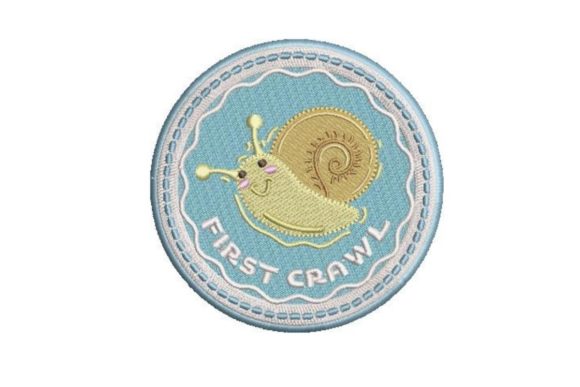
Baby Milestone First Crawl Design Review
There is something quietly emotional about a baby design that captures a fleeting moment rather than just decorating a onesie. When I opened the Baby Milestone First Crawl file, I immediately felt that pull, a design meant to mark a memory, not simply fill a hoop. The layout reads like a tiny announcement, soft and celebratory, with just enough visual weight to feel intentional without overwhelming the fabric it lands on. The mood is gentle, personal, and warm, exactly what you want when you are stitching something a parent will keep tucked away long after their child outgrows the crawling stage.
From a designer's eye, this is not a generic baby graphic. The theme feels specific, and specificity sells. A milestone like a first crawl carries emotional resonance that a random teddy bear or star pattern cannot match. The shape and composition suggest it was built with placement in mind, likely a chest print, a tote bag center, or a nursery decor accent. I could already picture it on a soft cotton romper, stitched in muted taupe and sage, or on a keepsake pillow cover where the date sits neatly beside the illustration. That kind of versatility matters when you are building a product line or preparing a personalized gift that needs to feel both polished and heartfelt.
First Impressions And Emotional Pull
The first thing I noticed about Baby Milestone First Crawl was how well the theme translates into stitchable shapes. Baby embroidery can easily slip into overcomplicated territory, too many tiny details, fussy shading, or lettering so small it puckers on anything but the most rigid stabilizer. This design, however, leans into clean lines and readable typography. The visual personality feels like a modern greeting card, simple enough to stitch cleanly, but distinctive enough that a customer browsing an Etsy listing or a craft fair table would stop and smile.
What makes a milestone design work commercially is that buyers are not just purchasing thread on fabric. They are purchasing the feeling of having documented something irreplaceable. As a reviewer who has stitched dozens of baby-themed designs for client orders, I can tell you the ones that sell best are the ones that feel like a small ceremony. Baby Milestone First Crawl hits that note without being saccharine. It carries a handmade charm that appeals to parents who want something more thoughtful than a mass-produced sticker or printed graphic.
Where This Design Feels Most At Home
After studying the visual weight and layout, I mentally placed this design on a handful of products I regularly produce for my own small shop. The obvious first choice is a custom apparel piece, specifically a soft cotton or bamboo blend baby bodysuit. The design seems scaled for a chest or back placement, where the milestone text and graphic can sit comfortably without distorting around seams or snaps. A raglan sleeve sweatshirt in toddler sizing would also work beautifully, especially for a fall milestone photoshoot.
Beyond clothing, I would not hesitate to use Baby Milestone First Crawl on a linen pillow cover for nursery decor. The gentle theme suits a reading nook or a crib-side accent. I also see strong potential for an embroidered tote bag, the kind a parent might carry to a baby class or a library story hour. Tote bags offer a flat, stable surface that handles detail well, and they photograph beautifully for product listings. A canvas tote with this design stitched in the lower corner, paired with a small name or date, becomes an instant baby shower gift that feels curated rather than store-bought.
For handmade product sellers who work the holiday market, this design could easily transition into a Christmas ornament or a keepsake stocking tag. The milestone theme is not locked into a season, which means you can list it year-round and still feel relevant. That is a practical advantage for anyone managing a craft business with limited SKUs. A design that can flex across apparel, decor, and gifting categories is worth its weight in thread.
Stitching Reality And Fabric Challenges
Every embroidery design looks perfect on a screen. The stitching reality is where most designs reveal their true quality or their hidden headaches. When I evaluate a piece like Baby Milestone First Crawl, I start thinking about fabric texture, stabilizer choice, and how the stitch types will behave under actual needle movement. If the design includes satin stitch borders around lettering, those edges need to be wide enough to stay crisp on a slightly napped fabric like French terry. If the lettering relies on running stitch for fine detail, I want to know the minimum stitch length is reasonable, otherwise you risk thread breaks or skipped stitches on a lightweight cotton.
I strongly recommend testing this design on scrap fabric that matches your final product weight. A onesie is not a canvas tote, and a stretchy baby knit behaves very differently under tension. Use a cutaway stabilizer for knit fabrics to prevent shifting over time, and consider a water-soluble topper if the design includes dense fill areas that might sink into a plush surface. On dark fabric, where the thread color contrast will be highest, even minor registration issues become visible. I would stitch a sample on both a light cream and a deep charcoal swatch to confirm the design reads well in both extremes. That small step can save you from customer disappointment later.
For products that will face frequent washing, like a baby bib or a burp cloth, pay attention to stitch density. Overly dense satin stitches on a thin cotton can feel stiff and uncomfortable against a baby's skin, and they can also crack after repeated laundering if the stabilizer breaks down. A well-digitized design balances coverage with flexibility. The Baby Milestone First Crawl design appears to prioritize readability over heavy coverage, which is a good sign, but your own test stitch will tell you everything you need to know.
Commercial Use And Customer Perception
If you sell finished products, whether on Etsy, at markets, or through a boutique wholesale arrangement, the design you choose reflects directly on your brand. Customers may not know what stitch density means, but they absolutely notice when lettering looks wobbly or when a graphic feels scratchy. The Baby Milestone First Crawl design, executed well, positions your product as a premium personalized gift rather than a craft project. That distinction matters when you are pricing items for profit.
I also think about how a design photographs. A milestone piece like this one works brilliantly in flat lay images, styled with a few baby blocks, a knitted blanket, or a sprig of eucalyptus. The theme naturally suggests a story, which means your printable mockup or product photo can do emotional heavy lifting before a customer ever reads the description. For Etsy seller listings, that kind of visual storytelling increases engagement and can justify higher price points. A buyer purchasing a custom embroidered sweatshirt with a milestone design is not comparison shopping on price alone, they are looking for a seller who understands the significance of the moment.
Before listing anything for sale, verify the licensing terms that accompany your machine embroidery design file. Many designers allow finished product sales with attribution or within certain production limits, but never assume. Check whether commercial embroidery use is permitted, and if there are restrictions on digital sharing or reselling the file itself. The product description mentions multiple embroidery file formats, which is helpful, but you should confirm which formats are included and whether they match your machine's requirements before purchase. A design that stitches beautifully is useless if your hoop cannot read the file.
Designer Notes For A Professional Finish
Over the years, I have learned that small preparation steps separate a beginner's result from a professional one. Before you load Baby Milestone First Crawl into your production queue, take time to review a few key areas that affect the finished product. Here is what I check on every new design I run:
- Thread color contrast. Test the design with at least two thread palettes. A soft pastel version for a baby girl's dress will read differently than a bold navy and mustard version for a unisex sweatshirt. Make sure the lettering stays legible in both.
- Hoop size confirmation. Measure the design dimensions against your most commonly used hoops. If the design pushes too close to the hoop edge, you risk registration issues or fabric slippage.
- Small detail inspection. Zoom into any decorative accents or serif details in the lettering. If a letter element is too narrow, thread tension can pull it closed. A quick test stitch reveals whether the digitizer accounted for thread bulk.
- Stabilizer pairing. Match your stabilizer to your fabric, not just your design. A lightweight cotton needs a different approach than a heavy denim jacket. When in doubt, test two combinations.
- Wash testing. Run one stitched sample through a full wash and dry cycle. Check for puckering, thread breaks, or stabilizer ghosting. A design that looks perfect off the hoop but fails after one wash is not ready for customer hands.
I also advise checking how the design presents in a black and white mockup. If you offer a product preview image, and many digital product sellers do, the design should still communicate its intended message without relying on color alone. A milestone graphic that holds up in monochrome will give you more flexibility across product colorways and seasonal variations.
A Practical Use Case That Feels Real
Let me walk you through how I would actually use Baby Milestone First Crawl in my own workflow. A repeat client reaches out in late October. She wants a custom sweatshirt for her niece's first birthday, something that commemorates the crawling phase because the little one just started moving across the floor. The request is for a soft oatmeal-colored crewneck with the design stitched on the front, finished in a muted terracotta thread with a tiny name beneath the milestone text.
I pull the design into my software, check the dimensions against my 5x7 hoop, and confirm the lettering will stay crisp at that scale. I choose a medium-weight cutaway stabilizer because the sweatshirt fabric has a slight loopback texture. After a test stitch on a similar fabric scrap, I adjust the upper thread tension slightly to improve the satin stitch edge definition. The final result feels substantial without being stiff, and the terracotta thread against the oatmeal fabric looks warm and intentional. The client receives the sweatshirt, sends me a photo of her niece wearing it on a hardwood floor mid-crawl, and I have a new product image that sells the design better than any description ever could.
That scenario is not hypothetical. It is exactly the kind of project where a design like Baby Milestone First Crawl shines. It gives you a foundation to build on, whether you add a name, a date, or simply let the milestone speak for itself. The design does not try to do too much, and that restraint is what makes it valuable for embroidery project work across multiple product categories.
Final Observations From The Hoop Side
After reviewing hundreds of embroidery files, I have come to value designs that respect the craft. Baby Milestone First Crawl understands that baby embroidery is not about complexity, it is about clarity and connection. The design places the milestone front and center, uses stitch-friendly shapes, and leaves enough breathing room for you to adapt it to your specific product vision. Whether you stitch it on a tiny beanie, a nursery blanket, or a set of linen napkin rings for a baby shower brunch, the result will feel cohesive and considered.
For small shop owners and independent embroiderers, this is the kind of design that builds customer loyalty. A parent who buys one milestone product is likely to return for the next milestone, and the next. The Baby Milestone First Crawl file can anchor a whole collection of first-year keepsakes, from sitting up to first steps, and that repeat purchase potential is something smart business owners should not overlook. Just remember to test thoroughly, respect the licensing, and always stitch with the finished recipient in mind. A baby will not remember the embroidery, but a parent will keep it forever.