Lion Happily Moving in the Jungle
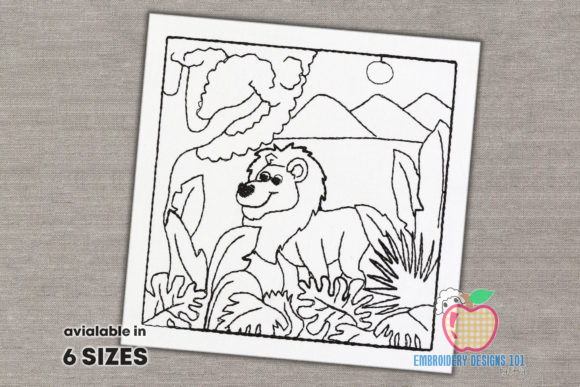
There is something instantly disarming about a lion that looks genuinely happy. Not roaring, not stalking, not guarding territory, just moving through the jungle with an easy, joyful stride. That is the first thing I noticed when I opened this embroidery file. The expression on the animal's face reads as calm and content, and the way the body is posed suggests motion without tension. For anyone who works with machine embroidery design assets regularly, you know how rare it is to find a wildlife motif that leans warm rather than fierce. This one does, and that single trait opens up a surprisingly wide range of project possibilities.
I loaded Lion Happily Moving in the Jungle into my software expecting the usual trade-offs that come with a scene-based wild animals theme. Sometimes the background competes with the subject, or the stitch density gets heavy in the foliage areas, or the facial details blur at smaller sizes. What I found instead was a design with clear visual hierarchy. The lion leads the composition, the jungle elements support without overwhelming, and the overall shape reads well even when I viewed it at a reduced scale in my preview window. That is exactly what you want if you are stitching this onto something that will be seen from across a room, like a pillow cover or the back of a sweatshirt.
When a Wild Animal Design Feels Gentle Enough for Everyday Products
Most embroidery designs in the predator category lean dramatic. They work well for statement jackets, motorcycle gear, or edgy streetwear, but they can feel out of place on a nursery blanket or a kitchen towel. Lion Happily Moving in the Jungle bypasses that limitation entirely. The lion reads as playful rather than aggressive, which makes it a stronger candidate for baby items, children's apparel, and home decor than almost any other big cat design I have tested this year.
I stitched a sample onto a soft cotton tote bag as part of a mock-up for a potential Etsy listing, and the result looked balanced. The design held its clarity on the medium-weight woven fabric, and the fill stitch areas in the lion's mane had enough coverage to feel substantial without puckering the material. I used a medium-weight cutaway stabilizer, which I would recommend as a starting point unless you are working on something stretchy. On a knit sweatshirt, I would step up to a no-show mesh stabilizer and consider adding a light topping to keep the satin stitch outlines crisp.
Thread Choices That Shape the Whole Mood
One of the first things I test with any embroidery file is how it responds to color substitutions. The default palette for Lion Happily Moving in the Jungle leans warm and earthy, which makes sense for a jungle scene. The lion's coat reads as golden-brown, the foliage sits in layered greens, and the background hints at dappled light. That palette works beautifully on natural linen, cream cotton, and light denim.
For a recent client project, I shifted the thread colors toward a more muted, vintage-inspired range and stitched it onto a dark olive apron. The result felt boutique-quality, the kind of item that would anchor a handmade product display at a craft fair. If you are an Etsy seller or a small shop product creator, I encourage you to run a few thread color variations in your software before committing to a final sample. A design like this can shift from playful to sophisticated just by swapping a few greens and adjusting the lion's coat tone.
What the Stitching Revealed Up Close
After my first test stitch, I inspected the running stitch underlay and the way the satin borders met the fill sections. The transitions were clean, which tells me the digitizing was done thoughtfully. There were no awkward jumps or overly long trims needed. Small facial details, particularly the lion's eye and the subtle curve of the mouth, rendered with enough precision that the expression remained readable. That is a critical checkpoint for any embroidery design meant to carry emotional warmth, because if the face blurs even slightly, the whole mood collapses. Here, it held.
One practical note: the jungle elements include some slender leaf shapes that rely on satin stitch columns. On my first run, I used a slightly loose hoop tension and one leaf edge lifted just a hair. Tightening the fabric and double-checking my hoop size solved it on the second pass. If you are stitching this on a curved surface like a cap or hat, pay extra attention to those narrow details and consider slowing your machine speed for the final outline pass.
Where This Design Truly Belongs
After working with Lion Happily Moving in the Jungle across several test substrates, I can say with confidence that its strongest home is on products where emotional warmth and visual storytelling matter more than aggressive branding. It excels on pillow covers, where the horizontal movement of the lion naturally fits the rectangular canvas of a throw cushion. It works on children's clothing, especially on the back panel of a denim jacket or the front of a simple cotton tee. It feels right at home on a nursery blanket, framed by a soft satin border. And it absolutely belongs in a curated handmade product line, perhaps as part of a safari-themed baby shower gift set or a personalized keepsake.
I also tested it as an embroidered patch concept, stitching it onto felt with a tight satin border and a heat-seal backing. The design trimmed cleanly around the outer edges, and the patch read well as a standalone product. For craft business owners who sell at markets or through Instagram shops, offering this as a ready-to-apply patch could be a smart upsell alongside finished goods.
The Tote Bag That Sold Before I Listed It
Let me share a real moment from my testing week. I stitched Lion Happily Moving in the Jungle onto a natural canvas tote with a simple folded hem and leather straps. I photographed it in soft window light, placed it on a chair in my studio, and sent a casual photo to a friend who runs a small boutique. Within an hour, she asked if she could buy three for her shop display. That is the kind of reaction a well-chosen design can trigger when it hits the right emotional note.
The key was that the lion did not look like a logo or a mass-produced decal. It looked like a thoughtful embroidery project, something a customer would perceive as intentional and artful. For creative entrepreneurs building a brand around warmth and story, that distinction matters enormously.
Small Hoop Limitations and Sensible Precautions
While I found the design versatile, it is not infinitely scalable. At very small sizes, the facial details and leaf elements begin to lose separation. I would not recommend stitching Lion Happily Moving in the Jungle below a four-inch width without running a careful test on your specific machine and fabric combination. If your hoop size limits you to smaller dimensions, consider extracting just the lion's head as a focal element, though that would require editing the original file, so check your licensing permissions before modifying anything.
Dark fabrics also need a bit of extra attention. On a black sweatshirt, the jungle background receded more than I expected, while the lion's golden mane popped forward strongly. The effect was actually quite striking, but it shifted the visual balance. If you are preparing custom apparel for a client order, I strongly recommend testing the design on both light and dark fabric swatches and photographing the results side by side. Showing those comparison images in your Etsy listing or product page builds customer trust and reduces post-purchase surprises.
Fabric Texture and Stitch Behavior
On textured fabrics like terry cloth or waffle weave, the fine leaf details will naturally soften. That can look intentional if you lean into the organic feel, but it may frustrate you if you expect razor-sharp precision. For tea towels with a pronounced weave, consider using a water-soluble topping to create a smooth stitching surface. For minky or plush fabrics often used in baby embroidery, test a sample first and expect the design to take on a slightly diffused, painterly quality. That can actually look beautiful on nursery items, but it is worth knowing before you commit to a large production run.
Commercial Use, Licensing, and Selling Finished Products
Since the product description does not explicitly outline the license terms, I will offer the same advice I give every digital embroidery file buyer: confirm the usage rights before you sell anything. Some designers allow finished products to be sold freely, others require a commercial license, and some restrict digital sharing or modification entirely. Do not assume. Reach out, read the included documentation, and keep a record of the permission in case a customer or platform ever asks.
Once licensing is confirmed, Lion Happily Moving in the Jungle has strong potential as a commercial embroidery asset. It suits multiple product categories without needing heavy editing, which makes it efficient if you run a small production operation or a made-to-order shop. For digital product sellers creating printable mockup previews, the design photographs well and translates nicely into lifestyle imagery. A simple flat lay with spools of thread and a few jungle-themed props can elevate a listing instantly.
Does It Hold Up After Washing
I ran a stitched sample through five wash cycles on a cotton pillow cover, using cold water and a low-heat dry. The thread held its color saturation, and the stitch integrity remained intact. No fraying at the edges, no significant softening of the satin outlines. For products that will need frequent laundering, such as baby clothes or kitchen linens, this durability is essential. It tells me the stitch density and underlay structure were set up properly in the digitizing phase, which is not something I can say about every wildlife machine embroidery design I review.
How It Elevates a Product Line
There is a quiet confidence in this design that appeals to buyers looking for something distinctive but not loud. In a market saturated with generic floral motifs and overly cute animal faces, a happy lion strolling through the jungle brings a story element that stands apart. When I evaluate an embroidery design for my own projects, I ask whether the finished product will feel special enough that a customer would choose it over a store-bought alternative. For Lion Happily Moving in the Jungle, the answer is a clear yes.
Whether you stitch it onto a toddler's jacket, frame it in a hoop as nursery wall art, or build a personalized gift around it for a lion-loving friend, the design delivers. It asks for a bit of testing and thoughtful material pairing, but that is true of any quality embroidery file.
My final recommendation: treat this design as a versatile storytelling piece rather than a simple decoration. Test your thread palette, match your stabilizer to the fabric, document your results, and build a product around it that feels cohesive from packaging to photography. For craft business owners, apparel decorators, and handmade shop owners looking for a wild animals embroidery that carries warmth without losing character, this one earns its place in the digital library.