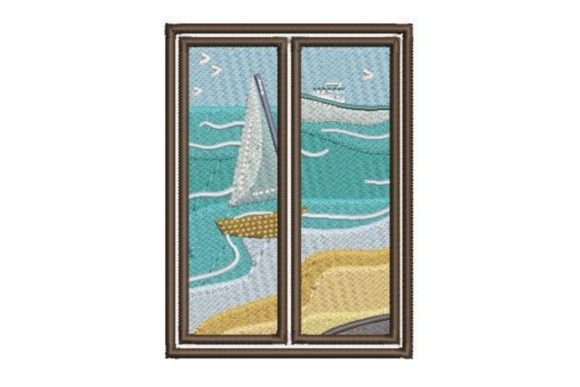
Seaskape Through a Window
When I unzipped the digital embroidery file for Seaskape Through a Window, the first thing that struck me was how effortlessly it captures that quiet moment of staring out at the ocean. It isn't loud or overly cartoonish—it’s the kind of decorative coastal art that stops a craft fair browser in their tracks. The window frame acts as a natural border, pulling your eye straight toward the soft sand, gentle waves, and hint of sky beyond. For a handmade product seller, that framing is pure gold. It instantly elevates whatever it’s stitched onto, giving it a premium, almost gallery‑print feel without becoming stuffy. I could immediately see this design holding its own among farmhouse beach decor, modern coastal linens, and even elegant nautical gift items.
A Glimpse of the Shore: First Impressions for Craft Fair Success
Beach lovers are an emotional buyer group. A well‑executed machine embroidery design that mirrors their favorite memory—like looking out a window at the sea—taps straight into that nostalgia. This design isn’t cute or funny; it leans decorative and soft, with a hint of rustic storytelling. The window panes add architectural interest, while the seascape itself stays calm and inviting. From ten feet away across a busy market aisle, the texture of the framed scene and the interplay of blue, sandy beige, and bright highlights catch the light beautifully. That’s a huge advantage for a craft fair product: it reads clearly at a distance, then rewards closer inspection with delicate waves and subtle gradations. As an embroidery designer prepping for a weekend booth, I rate that first impression very high.
Where Seaskape Through a Window Shines Brightest
Not every design works across the board. I always test a new file on the pieces that actually sell in my tent. Here’s my honest breakdown for Seaskape Through a Window:
- Tote bag design – This is where it will dominate. A roomy canvas tote becomes a walking coastal statement. The large surface lets the window frame breathe, and the horizontal composition suits the bag’s natural proportions. Pair it with rope handles, and you’ve got a top‑seller.
- Tea towel embroidery – Flour‑sack or linen tea towels love this kind of imagery. The soft fabric mimics the texture of a watercolor, and the design can span nearly the entire front. It photographs wonderfully for an Etsy seller because the window motif instantly sells the “coastal kitchen” vibe.
- Apron embroidery – On a bib apron, place the design high on the chest. It feels like wearing a view. Avoid thin, flimsy apron fabric; a heavier cotton drill holds the stitch structure better and keeps the shoreline crisp.
- Pillow covers – A rectangular lumbar pillow is ideal. The windowed seascape becomes a peaceful focal point on a couch or porch swing. This is the kind of finished product customers pick up, hug, and carry straight to the checkout.
- Pouches and small bags – A slim zipper pouch can host a scaled‑down version, but I’d be very careful here. The charm of the window is lost when the design drops below about 4‑inches wide. If you offer mini pouches, stitch only a portion of the scene—maybe just the lower beach and frame—so it still reads clearly.
- Embroidered patch – This is where I pause. A patch of Seaskape Through a Window sounds adorable, but the window panes and tiny wave crests could turn into a dense, stiff block at patch size. If the stitch density is high, it may feel like a plastic disc. I’d only attempt it as a large back patch on a denim jacket, and only after a careful test sew‑out on scrap twill.
Selling Points That Convert Browsers Into Buyers
In a handmade market, you’re not just selling an object—you’re selling the feeling it evokes. Seaskape Through a Window instantly whispers “escape.” Customers who love the Beach will pick up the item and start talking about their last vacation, their dream cottage, or a family trip. That emotional hook is what turns a casual looker into a buyer. The window element also makes it feel more intentional than a generic palm tree or shell. It’s a memory, not just a motif. From a small shop product perspective, this design supports a higher perceived value. You can price a tea towel or tote with this scene above a simpler single‑line design because it reads as a considered piece of art. I’ve learned that customers willingly pay more when the design looks like it took time—even when your commercial embroidery machine does the work. The key is to display it in a booth as part of a curated coastal collection, letting the thread palette tie everything together for strong brand consistency.
Production Practicality: What Every Maker Should Test First
Before I run a single dollar‑making item, I always stitch out a new embroidery file on scrap fabric. With a scene this detailed, that step is non‑negotiable. Based on the description—a beautiful landscape of a beach inside a window—you’ll want to pay close attention to these real‑world production points:
- Stitch density – Window frames, layered waves, and sand texturing can quickly become bulletproof‑dense areas. If the machine slows to a crawl or the fabric puckers, you may need to adjust the hoop size to give the design room, or use a heavier stabilizer. Cutaway stabilizer is your friend here, especially for items that will be washed often like tea towels and totes.
- Thread colors – The design’s mood depends entirely on the blue‑to‑sand ratio. Too pale, and the beach washes out on natural linen. Too dark, and the window loses its airy feel. I test on three fabric backgrounds—cream, white, and a soft heathered gray—to see where the contrast pops without losing subtle sky gradients.
- Fabric texture – Stitching directly onto highly textured towels or loose‑weave market bags can swallow the tiny wave crests and window sill details. I look for a tight, smooth base fabric like a cotton‑linen blend for tea towels and a quality duck canvas for totes. If you must use a slubby fabric, run a water‑soluble topper to prevent the small satin stitches from sinking in.
- Curved surfaces and caps – Avoid structured baseball caps unless the window scene is sized to sit entirely on the flat front panel. The straight lines of the window frame will distort noticeably on the curve, making it look like a wavy funhouse mirror instead of a serene view. I’d keep this design firmly on flat goods.
- Dark fabrics – A navy tote or black apron sounds dramatic, but the window frame and darker sea elements can blend into the background. I’d strongly recommend light to medium backgrounds for Seaskape Through a Window, otherwise you risk customers squinting at your finished product trying to make out what it is.
Designer's Checklist for a Standout Booth Display
Once I’ve nailed the stitch‑out, I fold the practical prep into my booth strategy. For a design this scenic, I create at least one real printable mockup—a staged photograph of the design on a lined‑up product that serves double duty for an Etsy listing and for a little framed sign in the booth. I always stitch one fully finished tote bag design and one tea towel embroidery to hang at eye‑level, letting the thread work sell itself. I pair them with other neutral coastal designs so Seaskape Through a Window doesn’t get drowned out by busier patterns. The thread colors I lock in after testing become my palette for the entire beach collection, which saves time and keeps my brand consistency tight.
Small Details, Big Impact
Even though this is a scenic landscape, the details make or break a sale. Before I offer a batch of these at a market, I scrutinize the stitched window corners. Are the mitered lines sharp? Does the sand read as sand, not mud? If the stitch density is too heavy in the water area, it can pull the frame out of square. I also check for any tiny floating elements—birds, distant sails—that might disappear if customers choose a smaller hoop size. I always note the minimum recommended dimensions and stick to them. A 5x7 hoop might be the sweet spot, but without the exact specs from the digital embroidery file listing, you must do your own size‑versus‑clarity test.
The Photography Advantage
One huge plus of the “through a window” concept is how naturally it photographs. The frame draws a clear border, making the composition easy to center in a flat‑lay or a lifestyle shot. For Etsy seller listings, I use a beach‑inspired prop—a piece of driftwood, a smooth stone—and shoot in diffused window light. The result looks editorial, not crafty. This design practically styles itself, which cuts down the time you spend creating design assets for your small shop.
Licensing and Commercial Use Reminder
File formats are mentioned as multiple in the description, but specifics weren’t laid out. I always confirm my embroidery machine can read the provided files before downloading. Even more critical: verify the commercial embroidery license. If you’re selling finished tote bags, aprons, or patches at a craft fair or online, you need the green light to use the machine embroidery design on goods for sale. Don’t assume—double check with the digitizer. Once that’s confirmed, you can confidently build a whole product line around Seaskape Through a Window, knowing this serene vista will bring the sea‑loving crowd right to your table.